

The clickable catastrophe on the coast
The shocking images of houses on the Outer Banks collapsing into the ocean are just the beginning of an environmental disaster for towns there.

Welcome back to Down from DC. This issue was written by Zoe Kane, one of our Wake Forest University student researchers, and edited by Phoebe and Natalie. We are digging out from two weeks of winter snow and ice and looking forward to getting back to a normal routine. But as Zoe writes, communities along the Outer Banks will be dealing with the aftermath of last weekend’s blizzard for a long time.
You may have seen the dramatic footage of houses in Buxton collapsing into the pounding surf during that storm. Four houses were swallowed up by the ocean, a replay of the eight that washed away last October.
Zoe was home in Nags Head for the holiday break and began reporting on the aftermath of those October storms. Hurricane season is long gone, but in January, the warming oceans brought us an equally destructive nor’easter, making this issue more urgent than ever.
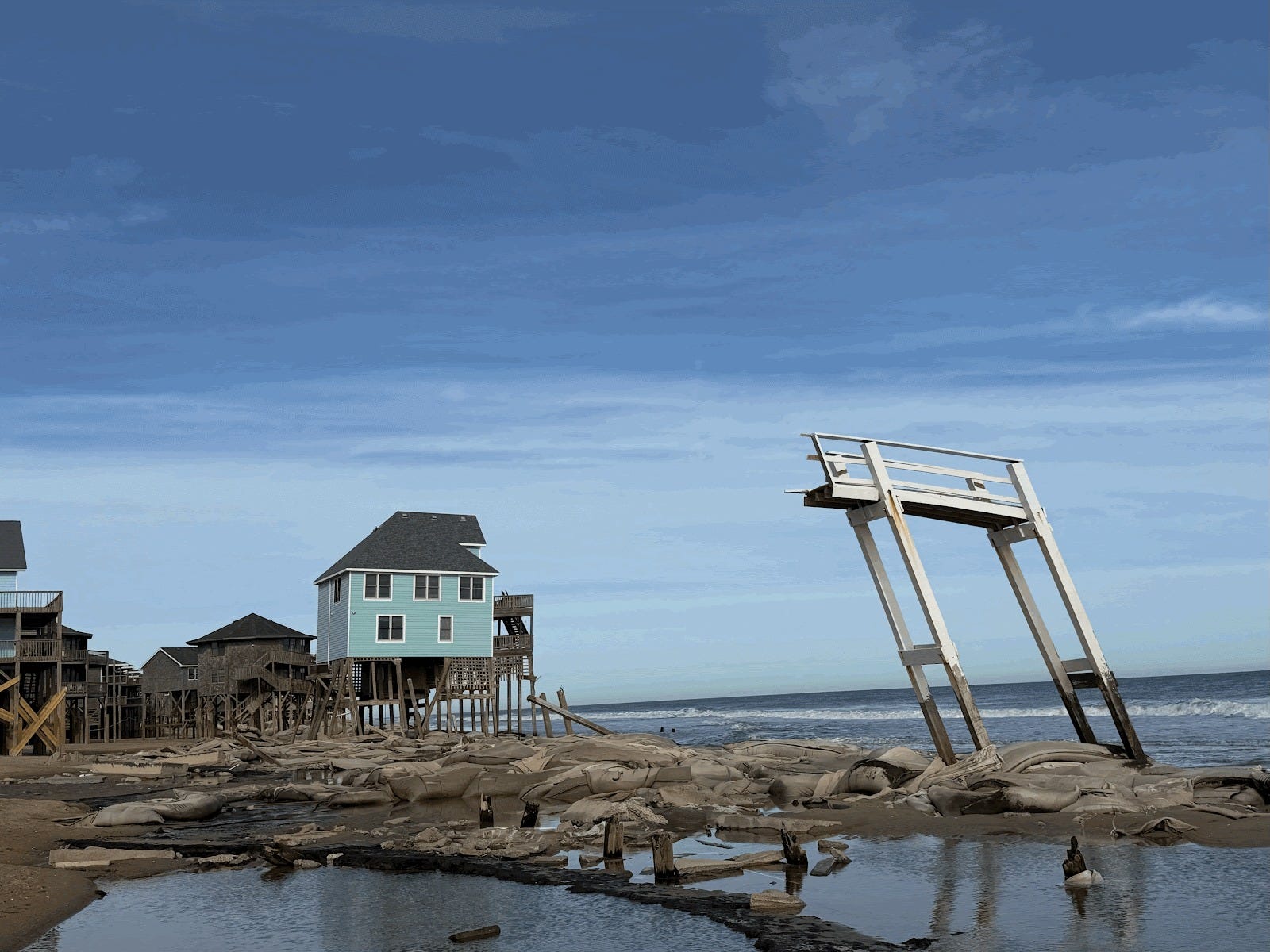
I have ridden the southern stretches of Highway 12 my entire life, past villages like Rodanthe and Buxton, where the ocean felt close, but always contained.
Over the years, that distance between land and sea has disappeared. It started with the yearly flooding, which the towns worked to contain by piling 40-pound sand bags to hold back the rising water.
But it’s been harder and harder for our island to keep up with the rising sea. The dunes I remember trying to peer over as a kid, just to snag a view of the ocean, are gone, and the pastel and cedar shake homes that once stood behind the dune line now stand directly in the surf.
I followed the news last fall about the homes collapsing off our coast with sadness, but some distance – I was away at college. When I came home for the holiday break, I wanted to see for myself what happened along that familiar stretch of Highway 12.
Seeing it in person stunned me.
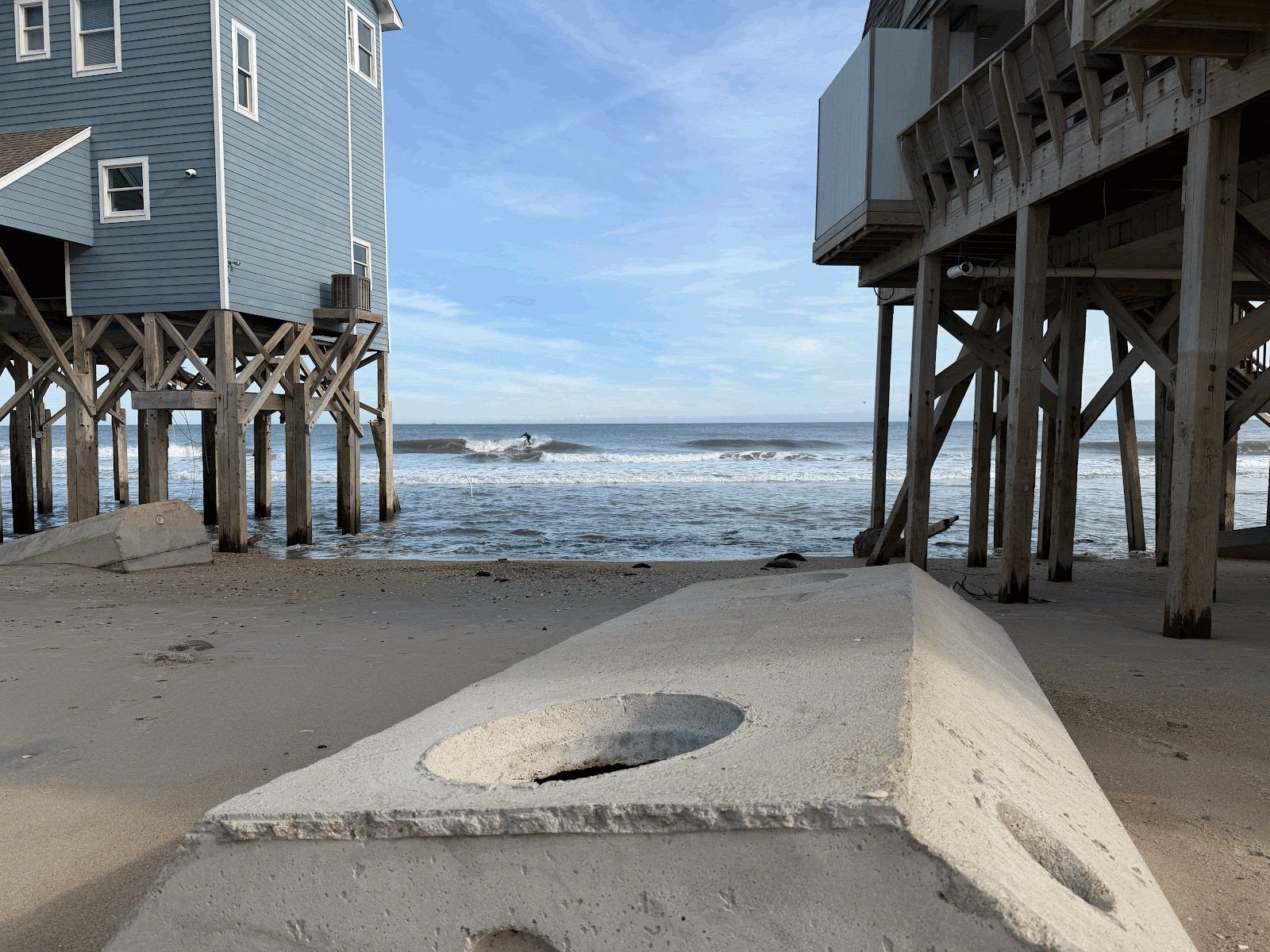
Where a house once stood was now an open beach littered with debris. I picked my way through the remains – wood, insulation, glass from windows, even septic tanks filled with sewage – all now resurfacing with the tide. Nails, exposed wires and concrete from the once solid foundations were strewn from the beach access to the water. In the distance, I caught sight of five surfers about 40 meters out on the sand bar, suited up for the cold December day. They rode the waves, oblivious, it seemed, to the hidden dangers.
Climate change has steadily reshaped North Carolina’s coastline, leaving the ocean closer to structures that were never designed to withstand a moving shoreline. Since 2000, sea levels along the state’s coast have risen roughly half a foot. This seemingly modest increase has translated into hundreds of feet of beach loss in some areas. According to the New York Times, the shoreline in Rodanthe is now retreating as much as 15 feet per year. At the same time, warming ocean temperatures have intensified hurricanes and nor’easters, delivering repeated storm surges with little recovery time in between. According to a 2024 NC Department of Environmental Quality report, 750 oceanfront structures along the NC coast are at risk from the rising seas.
In the last five and a half years, a total of 31 privately-owned homes along the Outer Banks have collapsed, with the majority of the losses occurring in 2024 and 2025. It’s gone from shocking to something we residents expect with every strong storm.
Stories about homes falling into the Atlantic Ocean now appear regularly in national outlets, warning about the risks of climate change and rising seas for coastal communities. But the initial collapse is just the start of the story. The news moves on, the urgency subsides and the policy solutions seem as elusive as ever. That leaves our island to deal with the aftermath, with no clear way forward.
These collapses aren’t just a few seconds of stunning, click-worthy social media footage. They create an ongoing environmental disaster for my community.
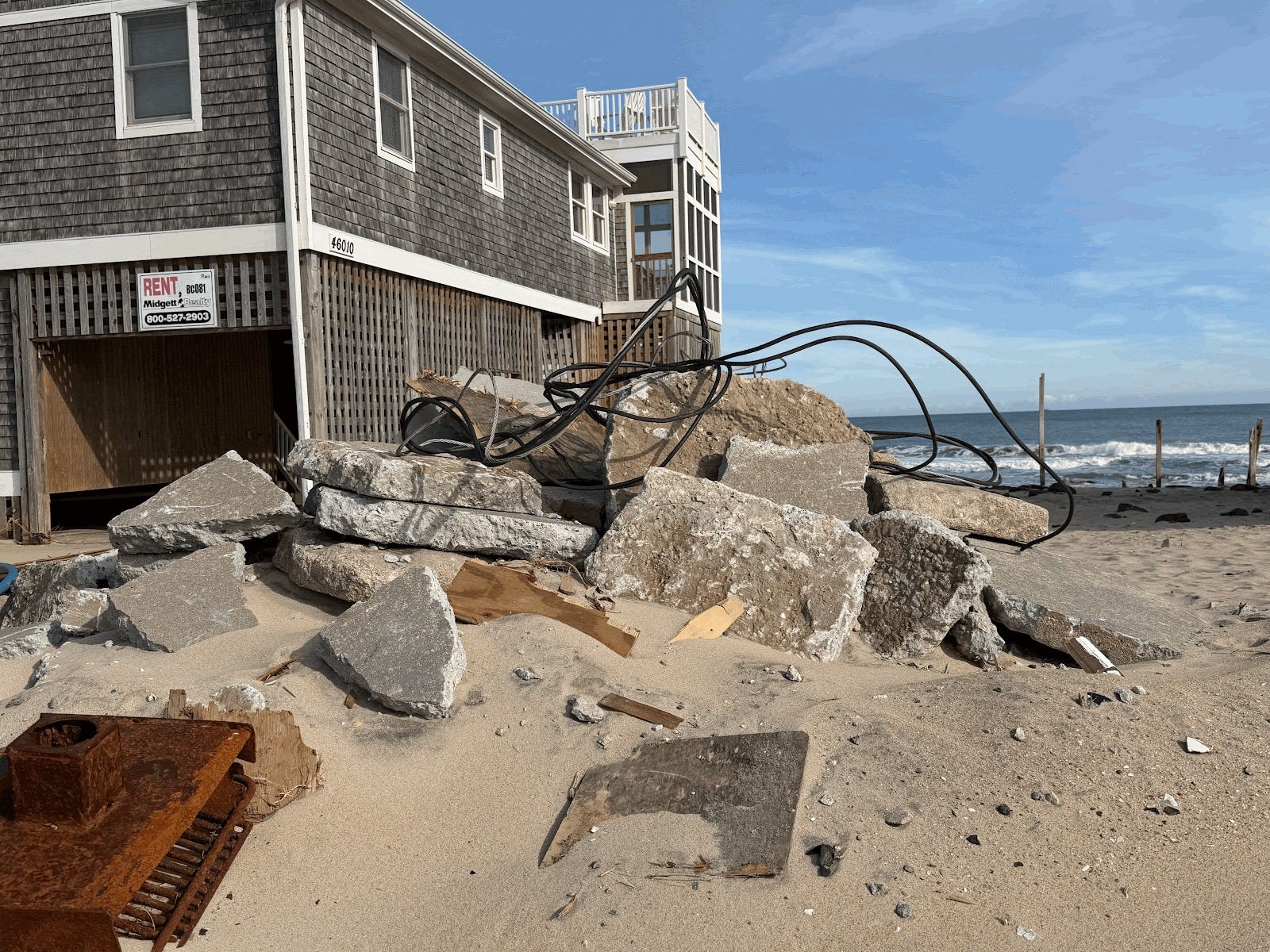
What can the federal government actually do about this?
I always understood that the federal government stepped in to mitigate the damage from natural disasters, but after my walk, I wondered: where were they? I dug in, and was astonished by the limits of that safety net.
The National Flood Insurance Program (NFIP), designed as an insurer of last resort, often absorbs the cost when oceanfront homes finally collapse, issuing payouts of up to $250,000 per structure. But the program, operated through the Federal Emergency Management Agency, does nothing to prevent collapses.
The National Parks Service, which manages the 130-mile long Cape Hatteras National Seashore, is responsible for debris removal from the park’s public beaches, but cleanup costs divert limited resources away from conservation efforts. NC Newsline reports that in 2025 alone, the parks service removed 400 truckloads of debris from fallen houses from the seashore. Additionally, The Assembly reports that the Parks Service spent over $700,000 in 2023 to purchase and dismantle two threatened homes, but subsequent budget cuts curtailed those mitigation efforts.
There seems to be an endless list of reasons why these preventable disasters aren’t being prevented by the agencies responsible for managing our coast. So in December, I sat down with the father of a high school classmate, Cliff Ogburn, who as town manager of Southern Shores and previously the longtime town manager of Nags Head has been at the center of these efforts for almost 18 years. That conversation helped me better understand how the federal flood insurance policy leaves homeowners – and the town – in limbo.
Because the flood insurance program offers no financial support for proactive measures such as relocating or demolishing homes, Ogburn explained that many owners simply wait for the ocean to take their property rather than attempt an expensive move on their own. In 2024, U.S. Rep. Greg Murphy (R-N.C.) introduced legislation to fund relocating or removing structures, but despite having bipartisan support, the bill has stalled in the House.
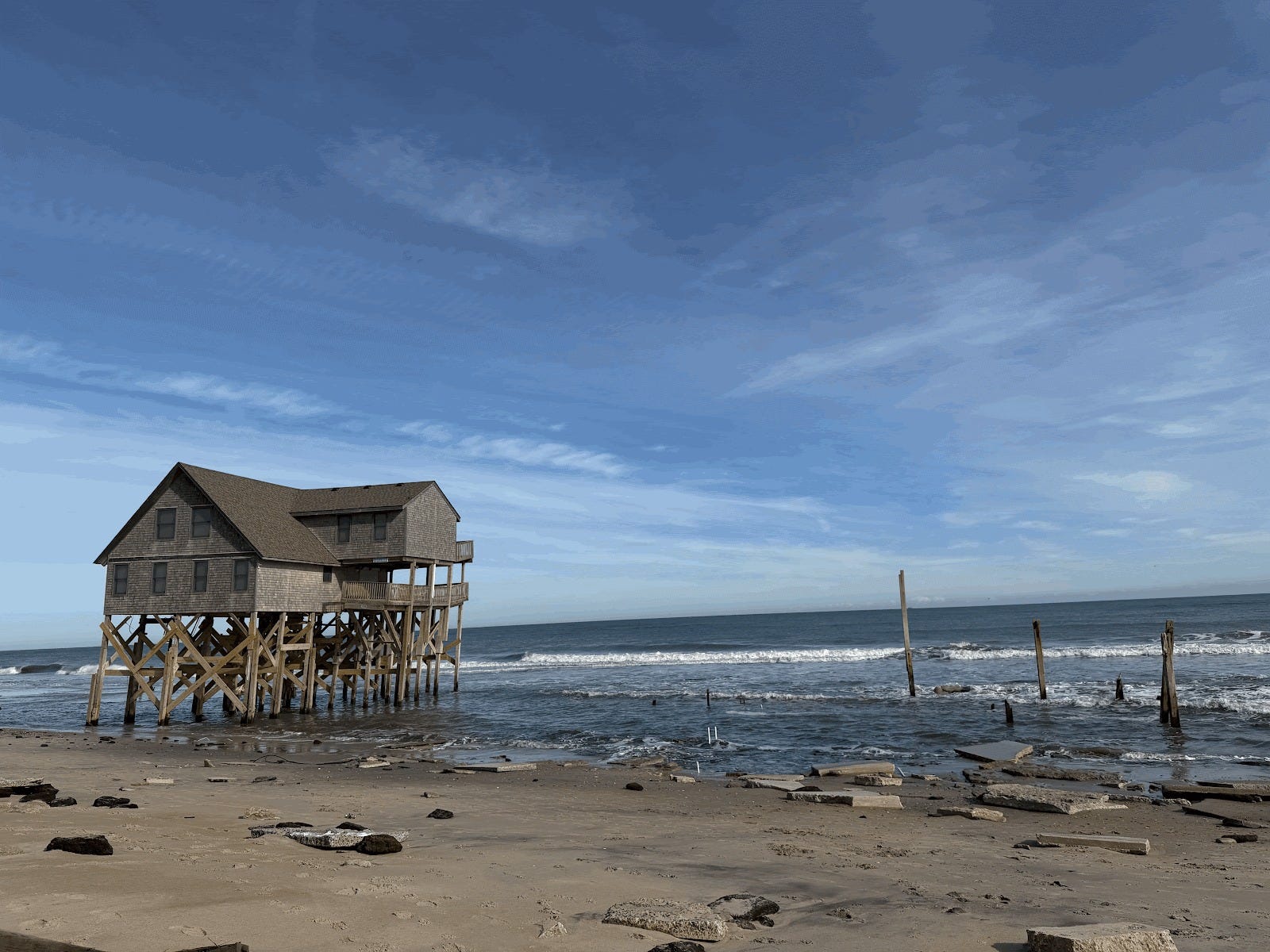
What’s at stake locally?
In Dare County, where oceanfront houses form a critical part of the tax base, roughly $275 million has been spent in recent years on beach nourishment projects. These are temporary efforts to protect property and beaches by pumping sand onto eroded shorelines. The money comes from sales taxes on hotel rooms and other local taxes. These projects can buy time, but growing up here, I have watched nourished beaches shrink again within a few storm seasons, forcing communities into a costly cycle of repair.
The state has a vested interest in keeping the Outer Banks accessible and economically viable. Dare County is considered a donor county, meaning that it generates substantial sales tax, largely from tourists, that fund essential services, like emergency management, beach nourishment or dredging. These funds effectively contribute to the state’s overall budget, which can include coastal infrastructure. But as properties collapse or lose value, fewer homes remain available for vacationers and debris from fallen structures increasingly threatens the safety and cleanliness of public beaches – like those surfers I saw on my walk, who seemed unperturbed by the waste nearby. Over time, the loss of land and housing threatens both the local tax base and the daily lives of community members.
And the exposed septic tank I saw is not uncommon. Once buried far beyond the shoreline, many now lie exposed at the ocean’s edge. This can cause unsafe conditions for beachgoers and risks polluting our waterways with toxic chemicals.
Two years ago, the state brought together people from state and local government, the Cape Hatteras National Seashore, universities and advocacy groups to figure out a solution. Their 2024 report makes a long list of recommendations for new state and federal programs to pay property owners to move or tear down at-risk buildings before they are washed away in the surf. But whether there is political will for any of these measures is an open question.
“This is a problem that isn’t going away and over time is only going to get worse but until it’s a crisis level, is anyone going to do anything about it?” David Owens, a retired professor of government at UNC Chapel Hill and a member of the task force, said in an interview with Down from DC. Owens said he has been working on what to do about coastal homes since the 1980s when he was director of the NC Office of Coastal Management, long before climate change made the problem more acute.
“It is harder now than it was then,” he said. “Our politics are much more contentious and adversarial and there is less interest in rational discussion. It is very difficult but it can be done.”
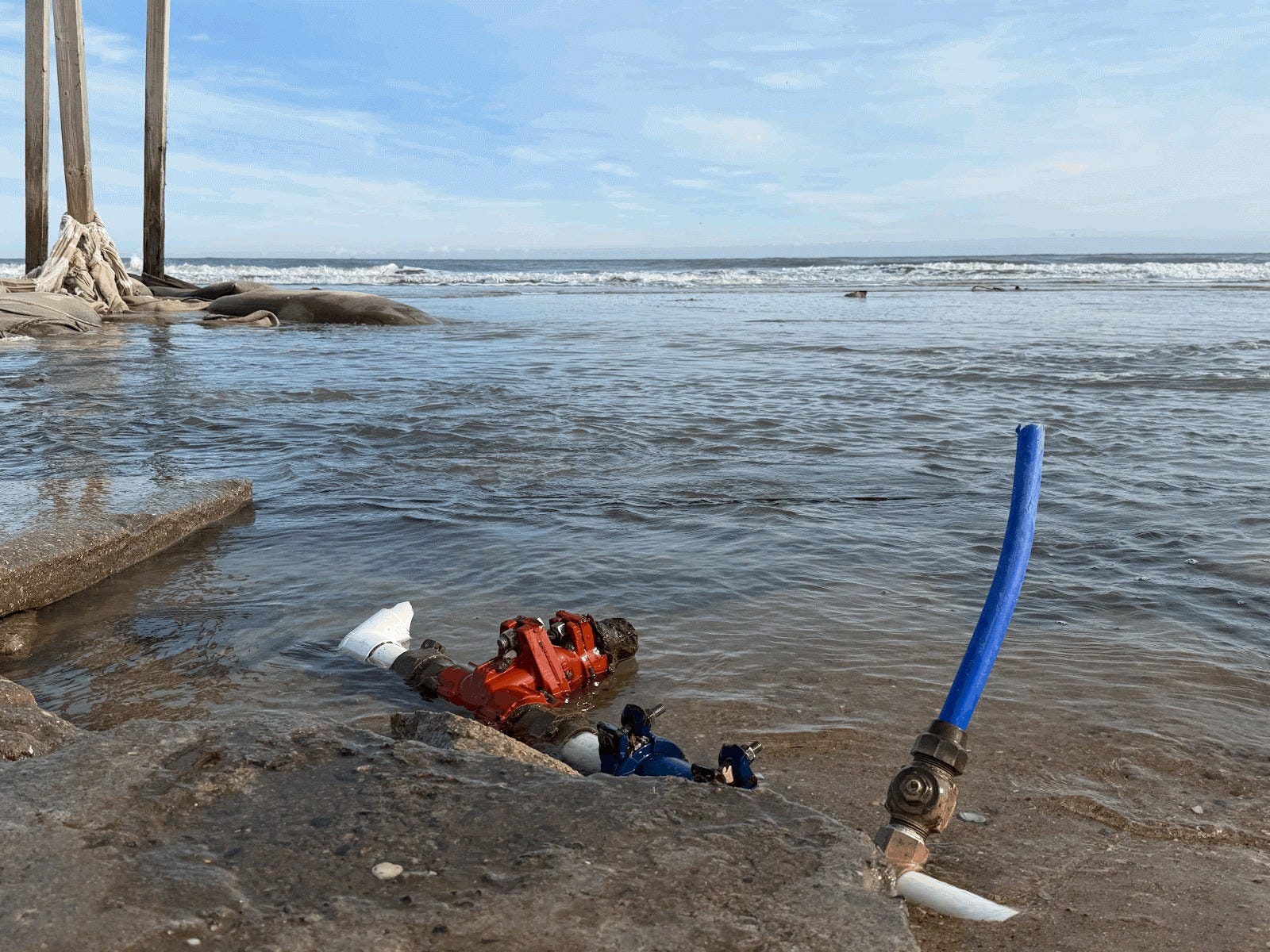
What’s being lost?
I learned an economic term from New York Times reporter Brooke Jarvis for the homes that now line the beach: “stranded assets” – meaning properties that once held significant value but have become liabilities. While many of the houses appear valuable on paper, their long term fate is clear.
“There are two extremes, either hold the coast in place as it is, and build sea walls,” Dare County Manager Bobby Outten said in an interview with the Coastal Review. “Or let nature take its course, let the houses fall and see the economy crumble.”
Ogburn and I agreed the term “stranded assets” doesn’t fully capture what is happening on this shrinking coastline.
Long before houses started washing away as frequently as they do now, Nags Head tried to find a way to remove the most vulnerable houses by condemning them. The state appeals court eventually ruled against that local ordinance, but Ogburn learned then the human toll such losses take.
“They’re not assets,” Ogburn said, remembering the conversations he had with homeowners. “I spoke to every single one of them, you know, some just as angry as they could possibly be, because that house, their grandfather built out there. Some of them said, ‘You can have it. I’m sick and tired of it. You have it.’ I think they may be sentimental assets if there is such a thing, but they are liabilities to everyone.”
 | A guest post by
|