

What we can't forget this Independence Day
We are gearing up to mark America's 250th, but commemorating our history is a year-round commitment for 10 North Carolinians. We asked them what they fear we're losing.

Welcome back to Down from DC, where we follow the decisions coming out of the White House, Congress and the federal courts and explain how they shape our lives here in NC.
I’ll be celebrating July 4, as I do most years, at a neighborhood potluck at the park down the hill from my house in Winston-Salem’s West End.
One neighbor brings the barbecue, made according to a family recipe. Someone else brings a bucket of fried chicken and the rest of us fill in with sides. My favorite part is the annual homemade pie contest, and then it’s off to the races, with children circling the playground on bikes and trikes decorated in red, white and blue.
It’s a public park, so families from other parts of town join in. Who can refuse such a spread or the celebration of our independence from the British monarch and the shared ideals that were agreed to 250 years ago?
The White House’s celebration of our semiquincentennial began in April with a prayer meeting up in DC on the National Mall. It continued June 14, on President Trump’s birthday, with an Ultimate Fighting Championship match on the White House lawn, followed by a state fair, which opened June 25 and will last until July 10.
The events around the 250th feel like a culmination of President Trump’s second-term efforts to promote his preferred version of American history. The April prayer rally was an effort to cast us as a Christian nation, a vision at odds with the Constitution’s promise of religious freedom. Trump and his second administration have taken numerous official actions to downplay inconvenient truths as slavery and the forced expulsion of indigenous people.
He has tried to remove materials from the Smithsonian Institution which he says “has, in recent years, come under the influence of a divisive, race-centered ideology.” He ordered The National Park Service to remove signs that commemorated enslaved people and in the case of the Smoky Mountain National Park and the Blue Ridge Parkway, flagged those that referred to climate change, air pollution and the forced removal of the Cherokee people. Last month, a federal judge ordered the signs restored.
The festivities in Washington, and the 250th itself, are ostensibly an effort to celebrate the founding and all that America has accomplished since then. But they are becoming yet another setting for disputing what parts of our history to hold up. North Carolina’s presence at that fair on the National Mall has become a perfect case in point.
Democratic Gov. Josh Stein’s administration declined to have the state sponsor a pavilion at the fair or send an official delegation, citing costs. In response, Republican House speaker Destin Hall accused him of playing partisan politics with a “patriotic event.” Several businesses from the state, among them SPEVCO, Richard Childress Racing and Mt. Olive Pickles, have sponsored the state’s showcase. When the exhibit opened last week, images of the booth circulated on social media, including of a split screen TV on one wall with the state seal from the NC state flag on the left and the red, white and blue X from the Confederate flag on the right.

Mt. Olive withdrew its sponsorship over the weekend. Stein condemned the Confederate symbol as “dishonoring the flag of North Carolina.” State fair organizers told The News & Observer that the video screen was removed.
It all has me thinking about how the way we tell our history says as much about who we are today as it does about our past. So ahead of this holiday, I reached out to some people who are steeped in our state’s history at community history museums across the state, from Cherokee in the west to Wilmington at the coast, and asked the same question:
What aspect of your community’s history is not given enough attention or is at risk of being lost, and why does it matter?
Their responses follow, with links where you can learn more about these museums, their exhibits, and how they interpret our shared past.
Kate Baillon, Museum Director, Cape Fear Museum of History and Science in Wilmington:
What is most at risk of being lost is not the historical record itself, but the nuance, context, and human experiences that give those records meaning. As generations pass, it becomes increasingly difficult to understand the complexities of historical events, and the motivations, constraints and decisions of the people who lived through them. Preserving and sharing these stories matters - it helps us to move beyond simple narratives, fosters empathy, and provides a deeper understanding of how the past continues to influence the present.
Zachary Dressel, Assistant Director, Earl Scruggs Center in Shelby:
Parts of our history are always at risk of being lost as generations move on, as people age out, and as communities age. We’ve seen that a lot here in Cleveland County. Shelby has done a really great job over the last several years recapturing the history around minority groups in our area, something that was previously underrepresented in the historical narrative in our community.
The Earl Scruggs Center is doing that through providing special exhibits that revolve around African American stories. It is extremely important for us to share the contributions of the African American Community because music in particular is a shared experience for all people. In our region in particular, people of all ethnicities participated in the making of music, in many cases combining cultures and traditions to create new musical forms. It is from this “musical soup” that American musical forms such as Bluegrass were created. If we are missing a part of the recipe, it is harder for us to understand how the soup was made in the first place.
The practice of sharing history works much the same way. We have to study the contributions of all the people in our community in order to better understand where we are now and look to where we are going.
Carol Ghiorsi Hart, Museum Director, Greensboro History Museum:
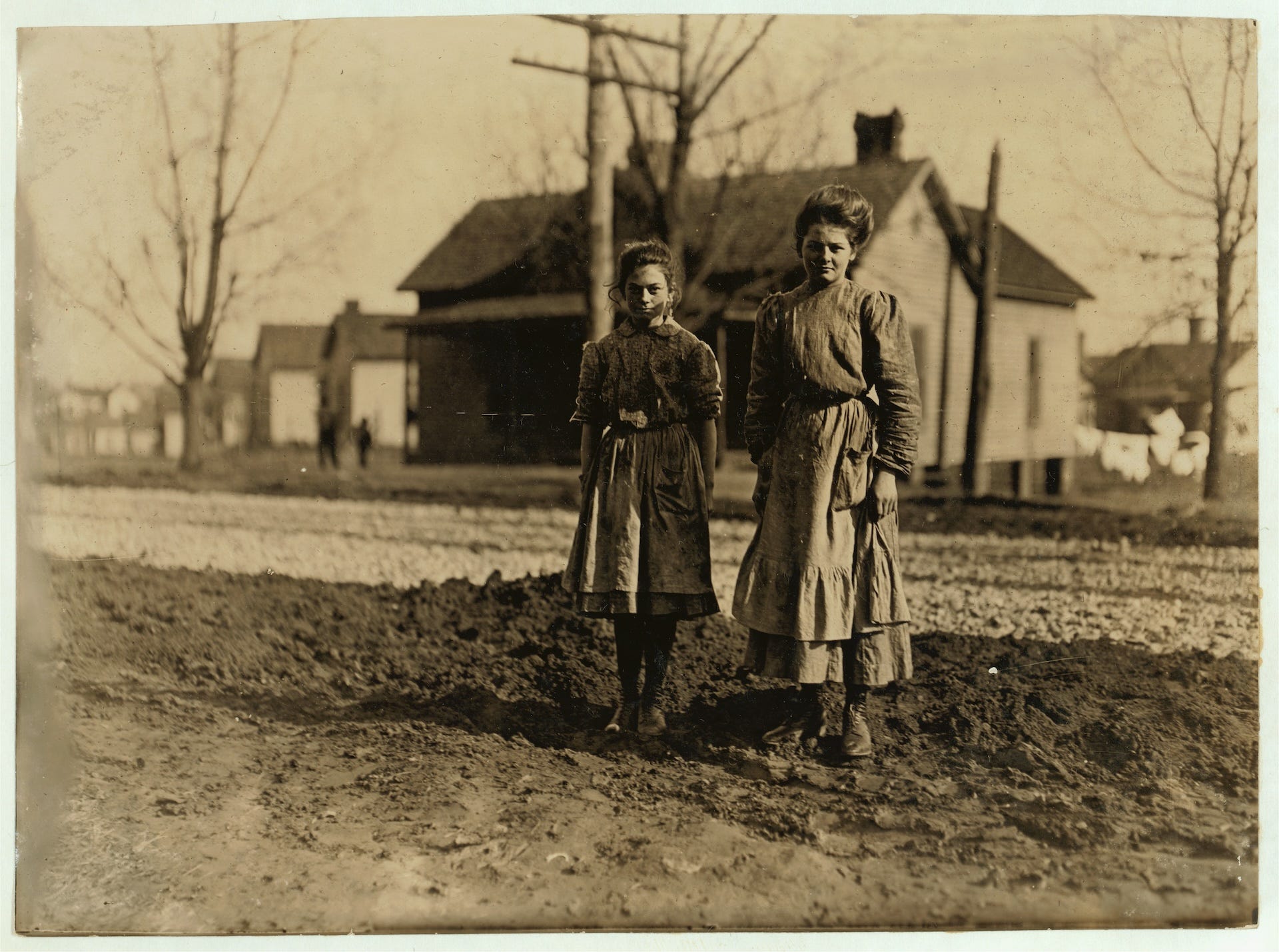
Greensboro may be a booming college town with tech companies arriving daily, but its true foundation was built on blue denim. Decades ago, the city was anchored by self-contained segregated mill villages where textile companies provided housing, schools, and churches—creating tight-knit communities that were under corporate control. Today, this working-class heritage is at risk of being lost to rapid gentrification, developer-led demolitions, and the passing of the last generation with firsthand memories.
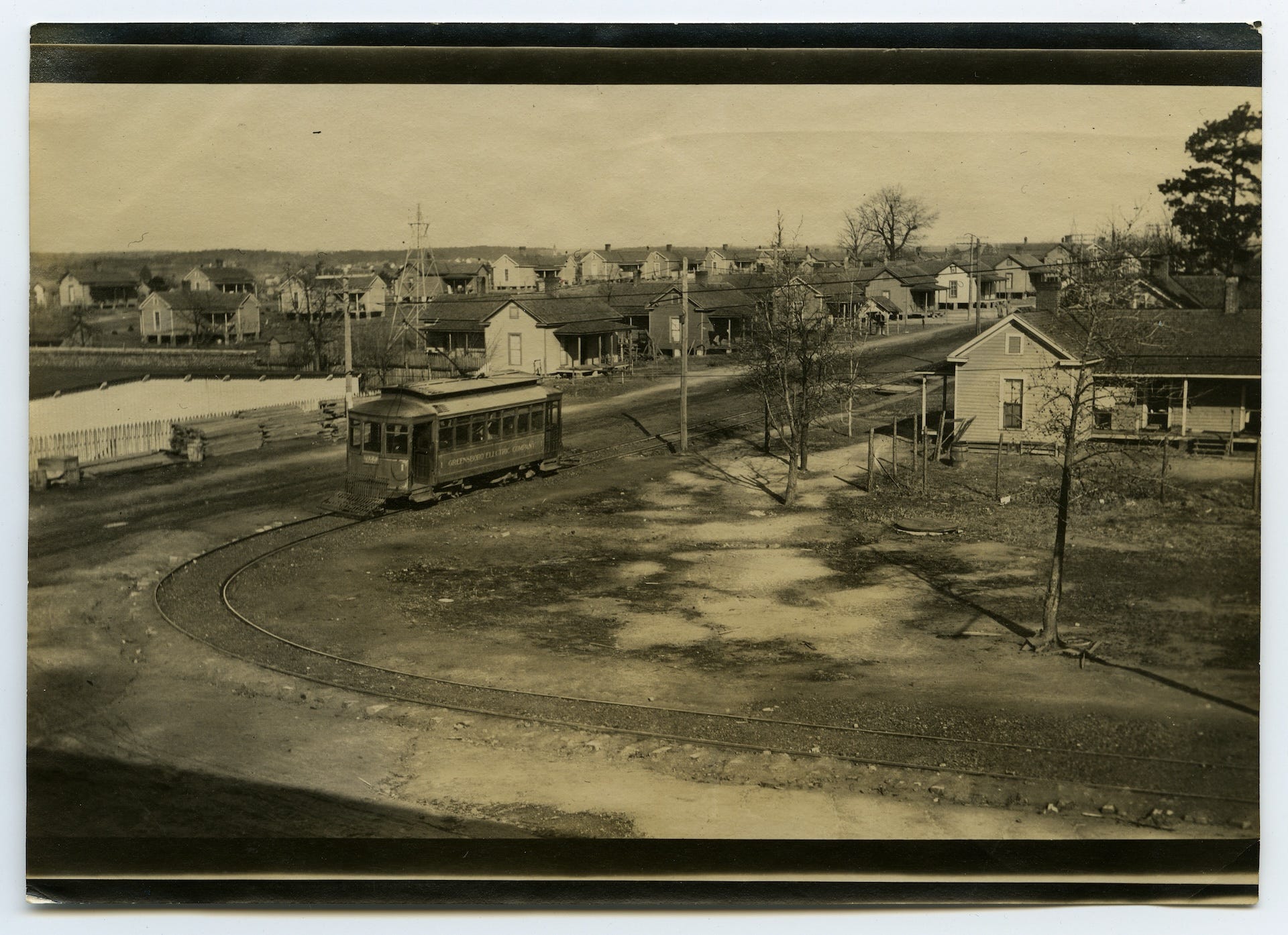
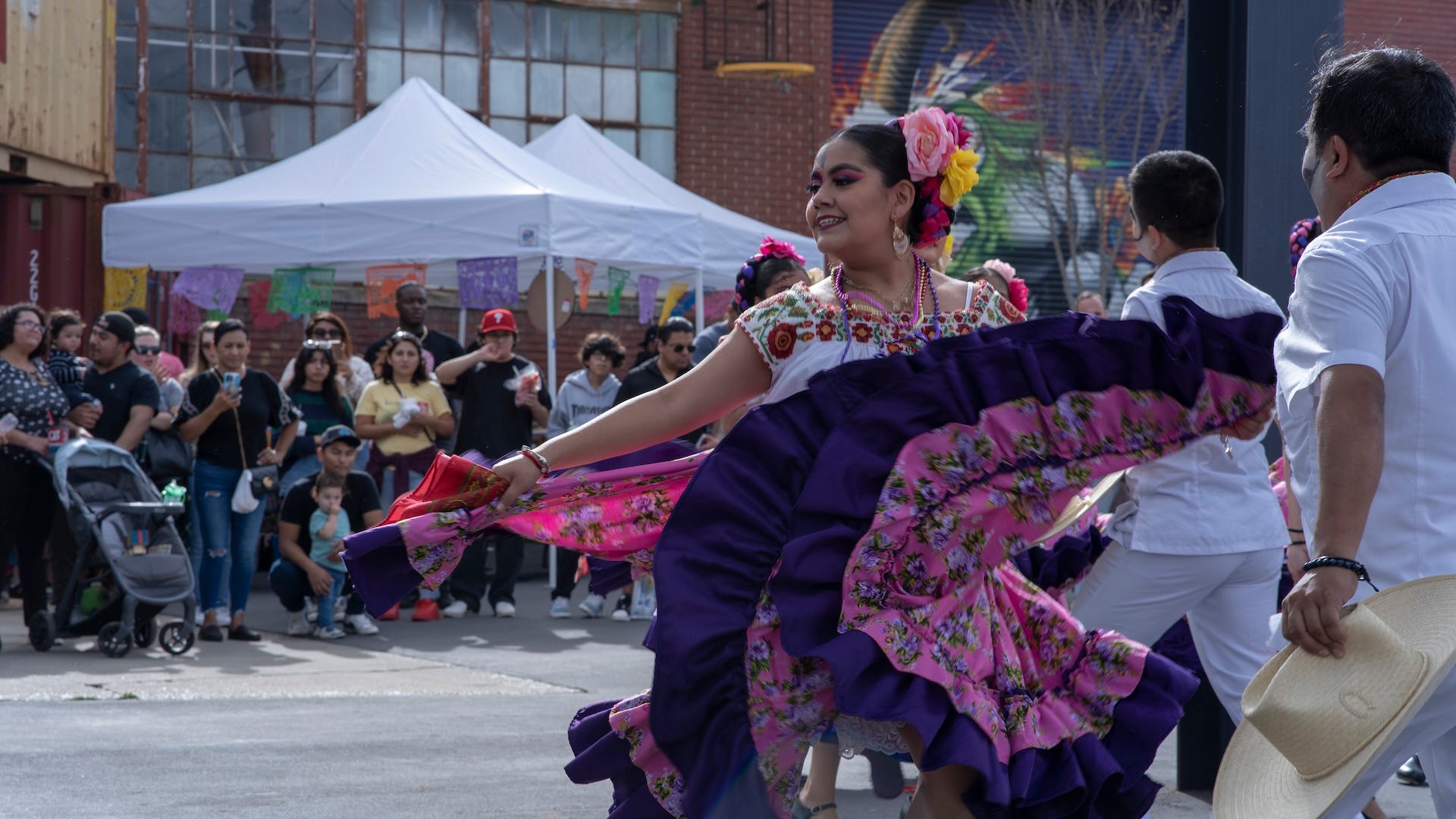
While some of the factories have been repurposed, preserving this history matters – it is the foundation of Greensboro’s identity. More recently, the arrival of new people and new ideas is an important but sometimes overlooked thread in Greensboro’s history, like it is for many cities. First-and-second-generation immigrants are always contributing to and reshaping our city, so it’s vital to represent and connect experiences of different individuals and communities across time. Greensboro’s Montagnard community (the largest outside of Vietnam) is one group making a difference today.
Bringing together different tribal and language groups originating in Vietnam’s central highlands, this community works locally to preserve cultural traditions like dance and weaving. They also collaborate with other immigrant organizations around community empowerment and equal access to health care and education. These are just a few of the ways they are contributing to the city’s evolving history.
John Swaine, CEO, International Civil Rights Center in Greensboro:
During the Civil Rights struggle, people worked together to achieve the big things – equal rights for all Americans. That is what we present at the International Civil Rights Center & Museum. It took a diverse range of persons earnestly and creatively working together to achieve the successes of the Greensboro F.W. Woolworth’s lunch counter sit-ins in a movement that expanded across the nation. Were it not for the sake of a commitment to achieve peace in this community, these protests might have ended in a disaster, as they did in some other places.
We persist in reminding people that we must work across divisions, or we will forget that it took people cooperating to get a Civil Rights Act of 1964, a Voting Rights Act of 1965, and other steps toward an enlightened social evolution. Unfortunately, our country is worrisomely divided now, and we are losing the capacity to work, think, and reason together — not to mention the ability to disagree meaningfully about what should come next.
Franky Abbott, Chief Content Strategist & Historian, Levine Museum of the New South in Charlotte:
Charlotte is often celebrated as a symbol of the New South — a city remade through banking, development, and rapid growth into a modern, forward-looking metropolis. But that story of reinvention only makes sense against the longer arc of what came before: the plantation economy, the Civil War, Reconstruction, Jim Crow, and the slow, contested work of building something more just — an arc that continues today as waves of new immigrants bring languages, cultures, and perspectives that are remaking the city once again.
The history we choose to teach shapes how we understand ourselves and our place in that unfolding story — and a city that doesn’t know that story can’t fully see itself or reckon honestly with the forces that history set in motion and that still shape Charlotte today.
Peter Koch, interim director, Mountain Heritage Center in Cullowhee:
I’m often asked what was going on in western North Carolina in the Revolution, particularly in 1776. The answer is the Cherokee-American war, also known as the Rutherford Expedition. Basically, this was a punitive expedition by the American Patriots in September 1776 to pre-empt Cherokee support for the British who ostensibly were upholding their territorial boundaries. The expedition had some fighting but mostly it resulted in many towns and fields of crops being burnt. The expedition paved the way for settlers who came to the region closer to 1800. Some of those settlers had been on the Rutherford expedition, so it can be seen as a founding event for the region.
Conversely, it can also be seen as genocide due to the consequent deprivation and famine that happened with people being burnt out of their homes and farms. I think this part of the Revolution is not getting its due since it’s an uncomfortable story and doesn’t fit with what is commonly known about the settlement of the region.
Shana Bushyhead Condill, executive director, Museum of the Cherokee People in Cherokee:
When we talk with our community about what we want our visitors to know, it is, inevitably, that we are still here. That response speaks to both the heartbreaking truth that most Americans do not have a clear understanding of Native people and history and also our incredible resilience. Narratives that center the “disappearing Indian” myth were highly effective. We continue to read signage in public history sites across the country, and specifically in the removal states of the southeast, that speak about Native people generally, and Cherokee people specifically, in the past tense.
Our story is continually told for us and about us. Our goal and intervention is to be a hub of Cherokee knowledge based on Cherokee scholarship. The fact remains that we are still here. We are the tribal museum of the Eastern Band of Cherokee Indians, one of three federally recognized Cherokee tribes. Cherokee Nation and the United Keetoowah Band of Cherokee Indians are headquartered in Tahlequah, Oklahoma and we are honored and blessed to be headquartered on ancestral Cherokee homelands in what is now western North Carolina. Our Cherokee ancestors negotiated and fought to allow us to remain and thrive as sovereign tribal nations.
Mike Wakeford, executive director, MUSE Winston-Salem:
What parts of the past deserve more attention? My instinct as a historian is to say “all of the above.” And I mean it, at least in this sense: sustaining historical understanding and curiosity about the past is an ongoing process. It requires vigilance. Those parts of our community’s past that have traditionally drawn focus—the Moravian heritage or the tobacco industry, to cite two easy examples—require reinforcement and critical revisiting lest they fade out of historical memory or become relegated to myth.
But as a museum dedicated to telling the whole, interconnected story of our community, we think it’s also vital to open new areas of understanding and encourage visitors to reflect on their own perspectives in light of new knowledge. In a city like Winston-Salem, highlighting stories of how African Americans powered our growth and evolution, bringing them to the center of the narrative, is of utmost importance. Similarly, the time is now to enrich the portrait of Winston-Salem’s sizable Jewish and Greek communities’ growth in the 20th century. And the growing presence of an internally diverse Hispanic population, which is now a decades-long story, now demands that we begin studying it through a historical lens.
In a time when division seems to animate American life, museums like ours remain steadfast in our belief that evidence-based engagement with the past is indispensable to the pursuit of a “more perfect union.”
Marc Barnes, communications manager, NC History Center on the Civil War, Emancipation & Reconstruction in Fayetteville:
At the NC History Center on the Civil War, Emancipation & Reconstruction, we believe that what’s not being given enough attention and is at the risk of being lost is in our name itself. The true story of the Civil War in North Carolina has never been truthfully taught, nor have the stories of Emancipation and Reconstruction.
We are working to change that by combining robust university- and Smithsonian-level historical scholarship with oral histories from families in all 100 NC counties, which tell the stories of the time before, during and after the Civil War. We sponsor lectures and send out academics to teach K-12 social studies teachers across the state. In 2028, a state-of-the-art facility will open in Fayetteville. The reason it matters is that 150 years ago, we were deeply divided. Today, we are still deeply divided. We need to understand who we were before we can improve on who we are and in so doing, work toward building a more perfect Union.
Danielle Buckingham, Public Historian, Pauli Murray Center for History and Social Justice in Durham:
Much of our work to uplift the life and legacy of Rev. Dr. Pauli Murray is about being rooted in community, especially in the historically Black neighborhood that nurtured young Pauli and where we now serve as historians, educators, and advocates. Pauli Murray’s existence defies attempts at presenting American history as one-dimensional and exclusive.
Murray exists in multitudes as a Black, LGBTQ+ feminist, civil rights activist, lawyer, educator, Episcopal priest, and poet; and it’s important that we reject censorship or erasure of all the identities and roles Murray held. For many folks, Murray represents the importance of affirming one’s right to exist no matter how many people try to deny it. At the Pauli Murray Center for History and Social Justice, we have witnessed the ways Murray’s life story spurs folks to action, and more importantly, leads to the most unlikely connections amongst individuals from all walks of life. This is why our work matters.
Happy Fourth of July to our faithful readers. There are, of course, celebrations and exhibits happening all across our state. Here’s a list, compiled by the N.C. Department of Natural and Cultural Resources, which encourages such themes as freedom, multiple voices and common ground as worthy of celebration.
We’re taking a summer break this month and will be back in August ready to analyze the impacts of what’s coming down from DC – and the major election ahead of us. In the meantime, please share the link with friends and family, and if you have not already, please subscribe.